4. Planting Farmer Saved Wheat Seed: Are You Really Saving Money?

By Jan Spears and Randy Weisz


Small grain growers are always looking for ways to cut production costs. One area often considered is planting farmer-saved seed. An initial comparison of the price of purchasing professionally grown seed of private or public varieties compared to the cost of using bin-run seed makes the use of farmer-saved seed appear highly attractive. However, there are risks associated with farmer-saved seed that can result in higher production costs. Growers thinking about planting farmer-saved seed need to consider these risks carefully.

SEED COSTS

If wheat seed is purchased from a dealer, the cost may range from $8.00 to $9.50 per 50-pound bag for publicly or privately developed varieties. Thus, at a seeding rate of 35 seeds per square foot, professionally grown seed costs could range from $16 to $27 per acre. (Assuming seed size varies from 11,000 to 15,000 seed per lb, and 35 seed planted per square foot, a grower would need between 2 and 2.8 bags of seed per acre.)

The cost of seed planted from the farmer’s bin varies. Was the seed cleaned, bagged, treated, and tested? Custom cleaning costs about $2.50 per bushel, depending on additional fees for bagging and storage. If the seed is treated with a low cost standard fungicide, it may cost another $1.25 per bushel. Additionally, higher seeding rates may be required for farmer-saved seed because the germination of bin-run seed is often below that of professionally grown seed. Table 4-1 compares estimated cost comparison for planting farmer-saved and professionally grown wheat seed.

At first glance, bin-run seed appears to have a cost advantage. However, quality issues with bin run seed can increase seed costs per acre.


Table 4-1: Cost ($ per acre) For Planting Bin-Run And Professionally Grown Seed*

Type Of Seed Planted

Wheat Grain Price ($/Bu)

2.25

2.75

3.25

Farmer-saved bin run

7

8

10

Farmer-saved custom cleaned

14

16

17

Farmer-saved custom cleaned and treated

18

20

21

Professionally grown public variety

20

20

20

Professionally grown private variety

22

22

22

* Assuming farmer-saved seed is planted at 3 bu per acre, custom cleaning costs $2.50 and fungicidal treatment costs $1.25 per bag, and professionally grown seed is planted at 2.4 bu per acre, and public varieties cost $8.50 and private varieties cost $9.00 per bag.

SEED QUALITY: THE CRITICAL ISSUE

All professionally grown seed have passed both field inspection and seed testing standards for varietal purity and freedom from certain weed and other crop seeds and certain diseases (like loose smut). In addition, most professionally grown seed of both public and private varieties have been treated with a fungicide to control seedborne and seedling diseases. Germination potential of small grain seed can in some years be reduced because of adverse weather conditions during grain development or during the harvest season. Even so, most professionally grown seed exceed 90 percent germination. This is not always true of farmer-saved seed.

The grower who buys professionally grown seed is assured of genetic purity, low amounts of weed seed contaminants, high germination, and seed that are disease free.

With farmer-saved seed, the producer must evaluate seed quality. Bin-run seed is not cleaned, seed-treated, or tested. The only quality check is, “It looks good.”

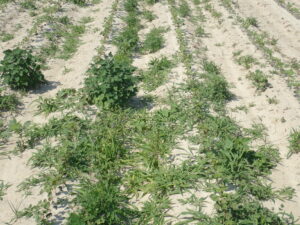
Bin-run seed may or may not be genetically pure, it may contain weed seed, it may be damaged by insect or disease pests, and may have low germination and vigor. If the variety has been grown for several years, it will probably be contaminated with seed of other varieties and may not have the original disease resistance and yield potential. Planting bin-run seed is not recommended since poor germination could result in reduced yields or even necessitate replanting. It could also contain weed seed and could spread weeds like annual ryegrass. If the seed contains seedborne diseases, it will produce poor yields and low-test-weight grain. So, the initial savings of $10 to $13 per acre associated with planting bin-run seed (see Table 4-1) may be lost later in the season.

The quality of the seed planted sets the yield and quality potential for that crop. Therefore, seed quality is an important consideration. A detailed description of important seed quality components can be found in Chapter 16, Small Grain Seed Production, which is at http://www.smallgrains.ncsu.edu/Guide/chapter16.html.

OPTIONS FOR USING FARMER-SAVED SEED

Testing

Farmer-saved seed should only be considered for planting if it is free of weed-seed contaminants and has a high germination rate. For free germination and purity tests, growers can contact their local Cooperative Extension center for details on how to submit a seed sample for testing. If a farmer is uncertain about weed-seed contamination and germination of bin-run seed, a sample from the bin can be tested. The test results will provide the basic seed quality information and aid in planting decisions. Growers are encouraged to have a germination test run immediately after harvest to determine if the seed is worth saving and again before planting to see if they are worth planting. Seed quality can change dramatically during storage, so testing twice is always good.

Custom Cleaning

A conditioner cleans saved seed. All custom cleaned seed should be tested for germination and purity before considering it for planting.

SEEDBORNE DISEASES AND FUNGICIDE SEED TREATMENTS

Producers need to be especially concerned that saved seed may be contaminated with diseases like loose smut, Septoria, or head scab. No-till production increases the chances of Septoria or scab contamination. If loose smut, Septoria, or head scab were present in the field the small grain was harvested from, the grain should not be used for seed. Doing so would contaminate the new crop, resulting in reduced yield, lower test weight, and the potential need to apply a foliar fungicide. If the small grain fields were not scouted for these diseases, any saved seed has the potential to be infected with them. Treating saved seed with a low-cost fungicidal seed treatment (e.g. Dividend Extreme, Raxil-Thiram, or RaxilXT) can reduce this risk.

WHAT HAS RESEARCH SHOWN?

When farmer-saved seed is free of weed seeds, is undamaged by pests, has high germination and vigor, and is disease-free, research has shown that it can be highly successful in producing a good crop. On the other hand, research and experience have repeatedly demonstrated that planting bin-run or even custom-cleaned seed of low quality can lead to a disaster. After considering the costs of custom cleaning, seed treatment, and higher planting rates usually required for farmer-saved seed, the benefits of using saved seed begin to narrow. In fact, once the price of wheat reaches $2.75 per bushel, producers can probably find professionally grown seed at prices equal to or even lower than the cost of cleaning, storing, and treating saved seed. When the additional costs associated with potential yield reductions and lowered test weight caused by planting poor quality saved seed are considered, the apparent economic benefits of planting bin-run seed disappear.

lLLEGAL INFRINGEMENT AND LIABILILTY

Most public and private wheat varieties sold and planted in North Carolina today have been protected through the U.S. Plant Variety Protection Act (PVPA, 1970, 1994). Under both the original and amended Plant Variety Protection Act, it is an infringement to clean, bag, or stock farmer-saved seed if the quantity exceeds what the farmer can legally save for planting purposes. Details on the PVPA, farmers right to save seed, and a list of varieties protected under PVPA can be found in Chapter 18 of this production guide, Understanding Seed Laws and Regulations, which is at http://www.smallgrains.ncsu.edu/Guide/Chapter18.html

SUMMARY

Sixty percent of a small grain crop’s yield potential is determined at planting. One of the most important factors in yield potential is the quality of the seed being planted. One way to be sure that seed is of the highest quality and purity is to purchase high quality professionally grown seed of public or private varieties. Certified seed is highly recommended.

Farmers saving their own seed may save some costs. However, farmers should only plant saved seed that is weed-seed free, is disease free, and has high germination and vigor. Growers who are unable to assure high quality in their saved seed should purchase professionally grown seed! Additionally, growers using saved seed should be sure not to violate Plant Variety Protection laws.


This file is a chapter from Small Grains Production Guide, 2004-05. Recommendations for the use of agricultural chemicals are included in this publication as a convenience to the reader. The use of brand names and any mention or listing of commercial products or services in this publication does not imply endorsement by the NC Cooperative Extension Service nor discrimination against similar products or services not mentioned. Individuals who use agricultural chemicals are responsible for ensuring that the intended use complies with current regulations and conforms to the product label. Be sure to obtain current information about usage regulations and examine a current product label before applying any chemical. For assistance, contact your county Cooperative Extension Center.

Return to Index: http//www.smallgrains.ncsu.edu/Guide/cover.html

Published by

North Carolina Cooperative Extension Service

Distributed in furtherance of the Acts of Congress of May 8 and June 30, 1914. North Carolina State University and North Carolina A&T State University commit themselves to positive action to secure equal opportunity regardless of race, color, creed, national origin, religion, sex, age, or disability. In addition, the two Universities welcome all persons without regard to sexual orientation. North Carolina State University, North Carolina A&T State University, U.S. Department of Agriculture, and local governments cooperating.

9/04—3M—JMG (AG-580 (revised) EO4-43980

Last Revised Sept. 2004