By J. F. Spears, Extension Seed Specialist
In many respects, the production of small grain for seed is similar to the production of the grain crop. With a few exceptions, the requirements for disease management, soil amendments, and crop handling are essentially the same, regardless of the intended use of the harvested crop. Like the grain crop, small grain seed producers seek most of all to maximize yield. But because of the specialized use of the seed crop, seed growers must give certain practices more attention to enhance small grain planting quality. This is particularly true when considering crop rotations, disease management, harvesting, and drying. In addition, seed growers must follow practices that ensure genetic and crop purity, must handle the seed crop carefully to avoid quality loss, and must store seeds in an environment that minimizes seed germination and vigor losses.
Seed quality can be divided into five separate, but related components: genetic purity, crop purity, health, germination, and vigor. Each is important and each can be affected by management decisions throughout the growing season, during harvest, drying, and storage.
Genetic purity: The genetic composition of a small grain variety dictates heading date, disease and insect resistance, standability, quality (appearance as well as protein composition), and many other characteristics. Preserving the genetic integrity of the seed crop is essential and a matter of keeping accurate records, keeping planting and harvesting equipment clean, thoroughly cleaning all storage bins, augers, and conveyers, and exercising care when handling the seed.
Crop purity: Crop purity refers to the presence of contaminants including weed seed, other crop seed, and inert matter. Weed seed contamination is a major concern for small grain seed producers. Growers should keep in mind that keeping weeds out of the field is usually easier than removing the seed from the seed lot. Choose seed fields carefully, and avoid fields with ryegrass infestations. Inert matter includes stems, small stones, and pieces of broken seeds. It is important to harvest small grain seed at the correct moisture (13 to 15 percent moisture) and at the correct combine settings to reduce the amount of trash and broken kernels. Excessive amounts of inert matter can interfere with airflow during seed drying and aeration. It is important to keep the level of inert matter at a minimum.
Seed health: Seed health is related to seedborne diseases present on or in small grain seed. Several diseases can infect seeds and some may lower germination potential of the seed crop. Diseases that can influence seed quality include loose smut, Septoria glume blotch, scab or head blight, and Aspergillus spp. Seed growers should avoid planting seed fields in areas where these diseases are known to be prevalent and follow disease management practices found in the Chapter 13, Small Grain Disease Management, in this production guide (at http://www.smallgrains.ncsu.edu/Guide/Chapter13.html). Proper storage conditions and clean storage facilities are also essential in keeping storage fungi away from seed crops. All storage bins should be sanitized before the seed is loaded.
Germination: Germination is the measurement of the seed’s ability to produce a normal seedling when planted in ideal conditions (optimal temperature, moisture, and good aeration). Germination is reported on the seed tag and is one of the criteria used to determine if the seed lot meets State Seed Law requirements for sale. Also, it is the value that farmers often use to calculate planting rate.
Field conditions are rarely ideal and the germination test can at times overestimate field emergence. But regardless of its limitations, the seed germination test is the universal standard measure of seed quality.
Some freshly harvested small grain seed can be dormant, meaning the seeds will not germinate even if conditions are favorable. Dormancy is a survival mechanism that prevents seeds from germinating at the wrong time. The environment during seed development can influence the level of dormancy. Often seeds produced in hot, dry years will have a “deeper” dormancy which will be harder to break during seed germination testing. In general, small grain seed dormancy, if present, disappears naturally during farm storage after about two to three months, so the seeds farmers plant are rarely dormant.
Seed vigor: Small grain seed lots with nearly identical germination percentages, planted in nearly identical field conditions, can have very different emergence rates and final plant stands. This variation in field performance can be attributed to several events including differences in seed vigor. Vigor is the component that determines the potential for rapid and uniform emergence under a wide range of field conditions. No seed, no matter how vigorous, can withstand prolonged periods of adverse conditions at planting. However, a high vigor seed lot can withstand more stress during germination and longer periods of stress during early seedling development than a seed lot low in vigor. Stress could include cool, wet soils, crusting, chemical damage, flooding or any other environmental condition that places the seed in less than favorable conditions. Low-vigor seeds exhibit many symptoms of deterioration, with delayed germination and emergence among the first noticeable signs, followed by slower rate of seedling growth and less stress tolerance.
The key to attaining and maintaining high germination and vigor potential lies in timing and attention to detail. In addition to traditional production practices of fertility and pest management, good seed quality comes from proper planting, harvesting, drying, and storage of the seed crop.
The 3 C’s of planting include cleaning, calibrating, and checking. Planters must be thoroughly cleaned after each variety or species is planted. Thousands of kernels can be left in the planter, which will contaminate the next seed field if not removed.
Calibrating the planter is one of the most effective ways to save money. Seeding rates should be adjusted to account for seed size and planting date. (See recommendations in Chapter 6, Small Grain Seeding Rates for North Carolina, at http://www.smallgrains.ncsu.edu/Guide/Chapter6.html.) Overplanting leads to higher seed costs, while underplanting can encourage weeds, increase lodging, and reduce yields.
Check seeding depth and spacing often during planting. If planting no-till, be sure seeds are properly placed and covered. If the planting season is on the dry side, uncovered seeds will often fail to produce a seedling or the seedling will die before its root system can get established. Crop performance can be influenced by plant uniformity.
One last note on planting: Be sure to keep accurate field records. It is not a seed crop if you do not remember what variety was planted.
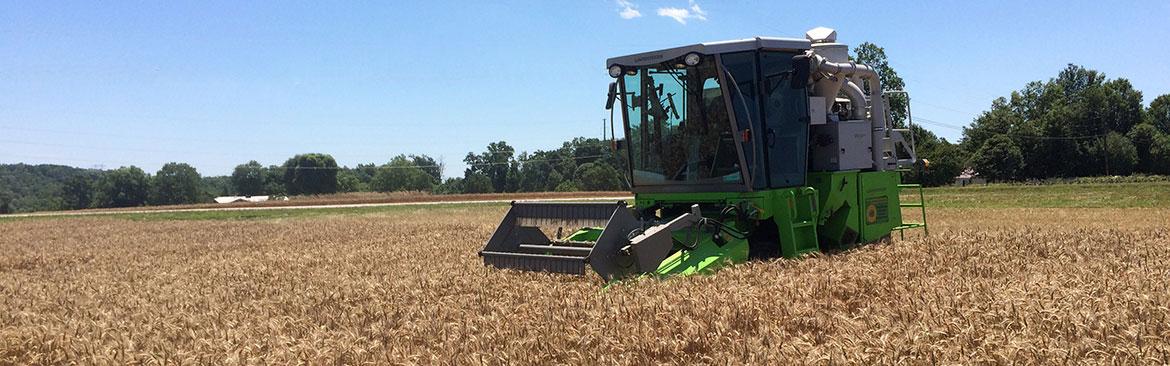
Harvest small grain grown for seed as soon as possible after the grain reaches about 15 percent moisture. Seeds are considered too wet for harvesting if the seed moisture is greater that 16 percent and too dry if less than 13 percent. Kernel breakage, which may reduce the seed lot’s germination potential, can occur if seeds are harvested too dry. Harvested wet seed bruises, which also can reduced seed lot quality. Seed growers are encouraged to check combine settings frequently during harvest and make adjustments as needed to minimize kernel damage.
Leaving the small grain seed in the field for an extended period after maturity is reached can result in lightweight seed, which is equivalent to lower test weight in grain. Lightweight seed typically has less energy available for germination, and the resulting seedlings are usually smaller and less vigorous. These low vigor seeds will also be slower to germinate and less tolerant of stressful conditions at planting. Diseases can also be a problem with small grain seeds left in the field too long. Fusarium and Aspergillus spp. are the major diseases that occur during field weathering and they can cause serious seed quality problems in the mid-Atlantic production area. One key component to seed harvesting is keeping varieties separate and pure. You could lose the entire seed crop if your employees do not pay close attention to details during harvest. One mistake can result in varietal mixtures, which cannot be sold as seed.
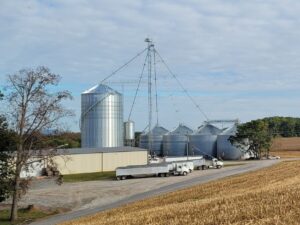
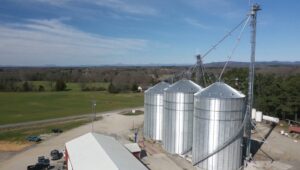
Small grain seed should be dried to around 12.5 percent moisture for storage. Storage fungi, which reduce seed quality, become active in seeds when moisture is 13 percent or higher. If moisture is greater than 17 percent, fungi can increase the temperature to110°F or greater. This causes rapid loss of seed germination and vigor potential.
High moisture small grain can be dried to the desired level. Seeds higher than 15 percent moisture require heat to dry the kernels, but temperature should not exceed 110°F. Monitor the drying process carefully because small grain seed can be damaged during drying if temperatures are too hot, if dried too fast, or if they are overdried.
The storage life of seed is cut in half for every 9°F increase in storage temperature and for each 1 percent increase in seed moisture.
Seed production requires dedication from the producer; dedication in keeping seed varieties genetically pure and dedication in attaining and maintaining the highest seed lot quality possible. Attention to detail and doing things on time are critical for all seed growers, regardless of commodity.
Management of the seed crop must have priority over all other farming operations. Successful seed growers must make this the mission statement for all of their employees.
This file is a chapter from Small Grains Production Guide, 2004-05. Recommendations for the use of agricultural chemicals are included in this publication as a convenience to the reader. The use of brand names and any mention or listing of commercial products or services in this publication does not imply endorsement by the NC Cooperative Extension Service nor discrimination against similar products or services not mentioned. Individuals who use agricultural chemicals are responsible for ensuring that the intended use complies with current regulations and conforms to the product label. Be sure to obtain current information about usage regulations and examine a current product label before applying any chemical. For assistance, contact your county Cooperative Extension Center.
Return to Index: http//www.smallgrains.ncsu.edu/Guide/cover.html
Published by
North Carolina Cooperative Extension Service
Distributed in furtherance of the Acts of Congress of May 8 and June 30, 1914. North Carolina State University and North Carolina A&T State University commit themselves to positive action to secure equal opportunity regardless of race, color, creed, national origin, religion, sex, age, or disability. In addition, the two Universities welcome all persons without regard to sexual orientation. North Carolina State University, North Carolina A&T State University, U.S. Department of Agriculture, and local governments cooperating.
9/04—3M—JMG (Revised) AG-580
EO4-43980
Last Revised Sept. 2004